The Recipe for Writer’s Block
It’s been so long. How are you?
Me?
[Insert reasons for not writing more sitcoms.]
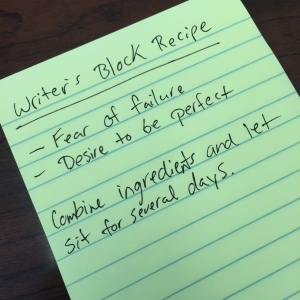
I’ve actually been working on food blog with my wife for the last year called Get in my Mouf. There is almost no overlap between writing sitcoms and talking about food, so I’ve had no reason to really mention it on here before. However, I wrote a quick post this week about writer’s block that easily applies to all types of writing. It’s short, fairly universal, and potentially useful*. So…check it out HERE.
*Some restrictions apply.
BAGMEN Short Film Premiere

Let’s go ahead and ignore the fact that I haven’t posted since March.
Good.
Hey, speaking of short film premieres in the Washington, DC metro area…
If you live in or around DC and you enjoy indie films, my buddies over at HMD Films are premiering a few short films that they’ve produced over the last year or so (including the one I wrote and co-produced, Bagmen). Details are below, or you can check out the HMD Films 2014 Showcase event page on Facebook for more information.
Date: Thursday, September 25, 2014
Time: 8:00 PM
Location: Angelika Film Center – Mosiac District, 2911 District Ave, Fairfax, VA 22031
Tickets: $5 online at Brown Paper Tickets (George Mason University students get in free with a student ID).
See YOU there!
Hidden Movie Stars on the Food Network – Part 1

To add to the random non-sitcom-related websites that I’ll be writing for, take a peek at Smash Cut Culture. I could tell you about it, but you’d probably just glaze over after “pop-culture/film blog,” so just read their About page. My addiction to Food Network and love of movies spawned my first post for them, so check it out:
Hidden Movie Stars on the Food Network – Part 1
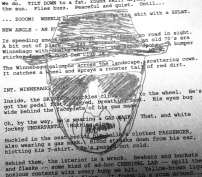
I’ve been going through some serious Breaking Bad withdrawal recently. So, I decided to feed the addiction by writing a blog post for HMD Films:
“One page of Breaking Bad is better than your whole screenplay“
.
Also, this is fun.
Written AND Produced by…
I wrote a blog post about my experience producing BAGMEN, a short drama that I wrote for my buddy Nathan McFarland to direct. It was a lot of work, but ended up being a lot of fun. I’ll eventually post a link to the short after editing is done, but for now you can check out the blog post here on the HMD Films website.
Happy Holidays!
PUPPYCIDE: The Documentary
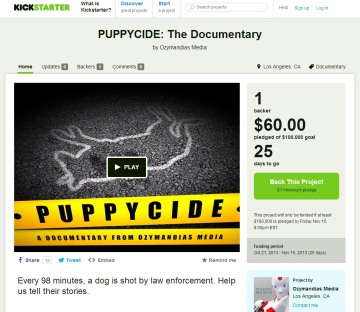
Every 98 minutes, a dog is shot by law enforcement.
That’s kind of a shocking statistic. And it’s only more shocking when you actually look behind the data and delve into the stories behind the numbers. When I first learned what puppycide was, my mind originally jumped to the idea of police officers accidentally shooting rottweilers and pit bulls during drug busts and gang shootouts. But then you start to look at the headlines…
“Cop Shoots Therapy Dog While Serving Warrant At Wrong House”
“Rochester Police Shoot Disabled Man’s Dog, Then Arrest Him Twice in the Days After”
“Cops Tell Mom Her Son Was Murdered, Kill Her Dog for Good Measure”
Uh…what?
Apparently, this type of thing happens all the time. And that’s why Patrick Reasonover and Michael Ozias (of Ozymandias Media) are making PUPPYCIDE: The Documentary. I met Patrick at the Taliesin Nexus Filmmakers Workshop (see my previous post about the workshop). Okay, “met” does not do it justice, because he is the President of the non-profit organization behind the workshop. So, he’s partly responsible for helping many young filmmakers connect with professionals in the entertainment industry and allowing them to have a kick-ass time in LA. Patrick is a great guy and I feel good knowing that he’s behind this project.
Back to PUPPYCIDE… It’s easy to point the blame at cowboy-headed shoot-first-and-ask-questions-later police officers, but PUPPYCIDE: The Documentary looks to create awareness about the issue to help bring about better training for law enforcement offers. The truth is that law enforcement offers have to make split second decisions about their own safety and without the proper training on how to handle unfamiliar dogs, the dogs are the ones that end up on the wrong side of that decision.
I encourage anyone (especially dog owners/lovers) to visit their Kickstarter page to learn more about the documentary and the research that they’ve already conducted. Their trailer and info page do an outstanding job of explaining the issue and why you should support it.
Why do I support the project? Because of this guy:
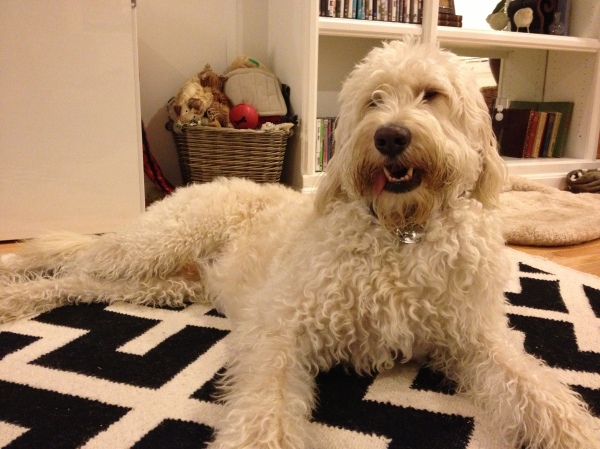
Cooper: part Lab, part Poodle, part dragon
A Quick Note…
I’m going to eventually update the theme for this blog and re-arrange some stuff. If anyone happens to notice any broken links on old posts, please let me know so I can fix them.
Thanks!
Indiegogo Project Spotlight: A Guy Going Crazy
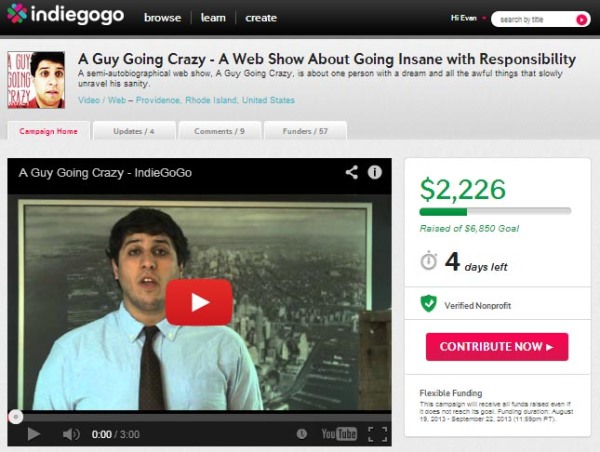
It’s been while since I’ve done a Q&A, so I figured I’d drag one of my new Taliesin Nexus buddies into an interview. Rich Camp is wrapping up (i.e. only four days left!) an Indiegogo campaign to fund his comedy webseries, A Guy Going Crazy. Rich has been very active on Facebook and Twitter promoting the campaign, so I hope his hard work doesn’t go to waste. He’s not afraid to go the extra mile to get people to fund, as he’s already eaten five whole raw jalapenos and embarrassed himself singing pop songs. Let’s meet Rich:
The Writer: Rich Camp
Evan (ES): Tell everyone a little bit about yourself…Who ARE you?
Rich Camp (RC): I’m a hopeless comedian. I saw Adam Sandler’s films as a kid and that was what sparked it all. I got into SNL and from there it was non-stop movies and comedy. I made stuff with friends and, as the most excited one, I always learned the different aspects (from writing to editing) just to make things happen. This has developed into me being well-rounded in the field and having written, directed, edited and produced a lot of my own work. It’s kind of a gift and a curse, because I can do all those things when needed but I only want to write and perform comedy.
ES: Your bio says that you have worked for Comedy Central and The Cooking Channel – What jobs did you have for those networks and what was the experience like?
RC: On Comedy Central I was brought in with a friend to re-edit a web show they didn’t like the direction of. It was a cool experience because it was such a loose show — semi-reality based — and had a loose script so we were able to sort of write in post-production, reworking all the footage into something funny. On The Cooking Channel I was an AD and AE, so I traveled with the production, helping on set then went back and set up all the edits for the real editors. It was a great experience and I met great people. I also was able to write an episode which included writing the voice overs and set-ups. It was pretty interesting.
ES: Do you have plans to move to New York or Los Angeles any time soon?
RC: I do have a plan to move soon. While living in Rhode Island has been great for writing and producing my own content. I have been spending a lot of time in New York and LA networking, so I want to keep that going. I am hoping that between A Guy Going Crazy and So This Is Something I can establish myself with a portfolio along with my writing samples to showcase my abilities.
ES: What television shows are you currently watching?
RC: I feel TV is currently transitioningl. I’m usually a big NBC comedy block fan, but there’s been a lot of changes. I like Modern Family, Parks & Rec, 30 Rock…stuff like that. I’ve been watching different shows on Hulu and getting into them only for the shows to be cancelled. Like Goodwin Games.
ES: What specs have you written and/or what shows do you plan to spec next?
RC: I’ve written a bunch. I wrote a 30 Rock, Always Sunny, and 2 Broke Girls. Most recently I wrote a Modern Family spec. I usually use the fellowships in the spring to force me to write a new one. Most recently I’ve been writing my web show which is great practice for TV. Plus I’ve written a pilot, Substitutes, with my writing partner Anthony Giambusso. Plus we’re working on some other pilots at the time. No new spec plans at the moment.
ES: I hear you are quite the reclaimed wood carpenter. That’s not a question, I just want to post a picture of the cool desk you made.

A Rich Camp original
ES: What is your favorite food?
RC: Pasta, all the way. But I will basically eat anything.
ES: Dogs or cats?
RC: Neither. Allergic to both despite growing up surrounded by multiples of each. It’s been torture. But, sadly, I do love animals.
The Project: A Guy Going Crazy
ES: What’s your project about?
RC: It’s semi-autobiographical. I’ve always made movies with different people and there’s been such absurd situations and the emotional highs and lows I go through. I have always wanted to document that, so I wrote this web show. I think it’s a perfect web show, because, between the characters and it being my own life, I could write seasons of this without any issues at all. There’s always absurd things happening and always ridiculous characters I’m meeting, that it just builds over time.
ES: How long did it take to write the scripts?
RC: The scripts took me about a month for the first drafts, but they’ve gone through many rewrites. After watching multiple web shows and learning more about the format, I have changed them. They’ve been in a constant state of being worked on since November 2012.
ES: Why should anyone donate to help you make it?
RC: I’ve made two features, plus a lot of sketches and shorts. I’ve worked professionally. And through all of this, I never had a budget nor any help. I taught myself how to do things just so I could make it happen. I thought of it as all my own personal education and with each project I got better and learned more. My most recent film, which was 2010 was so close to perfect. The only thing holding it back was time, crew, and help on aspects I just cannot feasibly master on my own. No one can be great at everything and I’m far from great at most things. With the donations we will get the proper equipment, hire crew than can assure we have professional audio, visuals and editing. All these other projects have been building to this one moment, to this project. All I’ve learned has gone into this one. Now that I’ve developed the skills I’m asking people to help me in making this the best project it can be.
ES: How did you come up with the budget?
RC: The budget is based on figuring out exactly what I would need to hire the right crew that can deliver professional services. It also incorporates any equipment rentals and purchases that would benefit the final show. Nothing is superfluous, anything we purchase will directly go towards making the production more efficient, which will allow us to focus on delivering a better product. I’ve learned from experience and failures to what would help keep things moving along and functioning without getting in the way. I tried doing sound myself along with a cameraman in the past with very cheap equipment; however, when I went back to the editing room I found out that the audio was unusable. So it will go towards things like that, which will directly help us keep quality at the same level as you’d see on TV.
ES: What if you don’t meet your $6,850 goal?
RC: If we don’t meet the goal, I will do everything I can. I’ve never let anything come in my way, I’ve always just put in the extra effort and made it happen myself without money. The difference is with the full budget we will be able to assure there are no mistakes. We made the last film and while most of it worked well, the audio situations as a non-professional (that I couldn’t handle) had to be dubbed and I did that myself (without proper equipment or skills) and the end result I feel does take the project down a notch. So the show will go on at this point due to the nearly year’s worth of work already into it, but with a full budget we can achieve the goals we’ve had for years in producing something stellar.
ES: You’ve been very active on Facebook promoting the campaign. Have you lost any Facebook friends since you started?
RC: Haha, I feel bad utilizing Facebook so much, but over the years with all my work I have built a pretty supportive group. While I know they’ve endured some earlier work that was just not up to par, they’ve been with me over the years and grown. Not to toot my own horn but people can see my ambition and even new people will recognize that and offer their help on set or promoting.
ES: The project is deemed a “Verified Nonprofit” – How do you set that up?
RC: There a lot of ways to do that. This project was chosen based on the scripts for a fellowship through Moving Picture Institute that invites you into a network and can help you along the way. Via that fellowship I was able to get nonprofit status, which has seemed to help, as more people are happy to learn of the tax deduction [Yes, I’d much rather give Rich my money and the IRS].
ES: After this project, what else do you have planned for the future?
RC: I would love to develop a bigger following for this show and have the fans demand a second season. If that was to happen I could have scripts ready immediately, since I’ve been developing new ideas this whole time. Aside from that I am planning to move to NYC or LA and continuing my education and performing at UCB, network and continue to produce sketches along with So This Is Something. I feel at this time we have the ability to create awesome content and get it out there, but beyond the potential for the viral success, we can also build a portfolio that can “wow” the industry when they ask what we’re capable of.
Thanks to Rich for taking the time to answer these questions. It’s always nice to see fellow filmmakers out there just getting shit done. If you have a few bucks, help support his campaign; otherwise you can feel free to drop Rich a line:
Twitter: @RichCamp
Website: www.whatboy.tv
So This Is Something…Episode 1
…or maybe it’s nothing…but we’ll see.
One of the guys (Rich Camp) I met at the Taliesin Filmmakers Workshop asked me if I was interested in pitching jokes for an online topical news show (think Weekend Update) that he was planning on shooting every week. Well, since I didn’t have much experience (ZERO) at writing topical jokes and it’s hard for me to say “no” to anything, I agreed. Figured it’d be a good learning experience.
Oh, the name of the show is “So This is Something” — Hence the title of this post.
Anyway, during the first week Rich, myself, John Bellina, Christian Borys, and Anthony Giambusso all traded emails with pitches for jokes and setups, commenting on others, fixing punches, etc. 56 emails later, we had a few dozen jokes. Exactly two were funny, but at the end of the week, we all picked our top 4-5 favorite jokes and after that Rich took over and produced the episode with the help of his camera man, Chris Loens.
From a writing standpoint, it was a lot of fun trading jokes. It also forced me to read the news (WTF is going on with Syria? And Miley Cyrus? RG3 is back!). So, no matter how much my jokes suck or how much Rich ruins my brilliantly crafted punchlines, it was time well spent. It also forces us to just GO DO and not dick around too much.
On the technical side, I asked Rich what he used to produce the episode and he sent a few pics:

He shot the episode on a Blackmagic Cinema camera and taped an iPad to the bottom of the camera to use as a teleprompter. Masking tape (and/or duct tape) is the best friend of any filmmaker. Bears are the enemy.


For editing he used Final Cut Pro X due to the quick turnaround time – working with a green screen was a literally a click away. He also has Adobe Premiere, but for these types of episodes, it’s more time consuming.
Taliesin Nexus Filmmakers Workshop

After over a year sleeping in a coma, it’s about time I brought this blog back to life…
Last weekend I was fortunate enough to be one of 27 filmmakers who were chosen to participate in the Taliesin Nexus Filmmakers Workshop, held in Los Angeles on the beautiful UCLA campus. Room, board, and travel were covered by the workshop, so it ended up being a free trip to LA to hang out with cool filmmakers and connect with industry professionals.
Taliesin Nexus is a non-profit organization whose mission is to connect up-and-coming filmmakers and experienced industry professionals who share a passion for a free society. Who doesn’t love freedom? No, this workshop is not solely for people who are making overtly political films or documentaries. All genres, media, and experience levels were well represented.
Aside from being free (both philosophically and monetarily), one of the major benefits is that the workshop affords some quality time with industry professionals. Starting on Friday evening and running through Sunday afternoon, the workshop included seven panels ranging from 60 – 150 minutes in length. Through these panels, we were able to interact with a great range of talented folks including (but not limited to) Paul Guay (screenwriter, Liar Liar), Daniel Knauf (television writer/creator, Carnivàle), David H. Steinberg (screenwriter, American Pie 2), Warren Zide (producer, Final Destination), and Kailey Marsh (manager/producer and creator of The Blood List).
There wasn’t a dull moment the entire weekend, but the highlight for me was getting the opportunity to pitch a feature comedy idea to Paul Guay and David H. Steinberg. The entire class was “forced” to give the two screenwriters their best pitch, while Paul and David asked questions, poked holes, and offered suggestions in the same way a Hollywood exec or producer would. It was more stressful than that time I was awaiting a call from the Blue Man Group, but it ended up being an amazing learning experience.
Takeaways from some of the other panels include:
- Content is king.
- Kailey Marsh is queen (of horror).
- Go Do. Don’t waste time thinking about a project or developing it. Just make it, then make something else, then make another thing, and then another…repeat 10,000 times until you get paid for it. Then do it 10,000 more times.
- Stop writing good scripts. Write amazing stories. “Crap plus one” doesn’t cut it.
- If the people you work for like Fruit Loops, then always have a backup box of Fruit Loops. I.e. be the best at whatever menial job you have…even if it’s hoarding cereal while taking notes in a writers’ room. (For more on working hard, check out my favorite podcast interview in the history of time: #5 – Stephen J. Cannell.)
- Be prepared to eat shit for AT LEAST five years. If you do not quite prefer the taste of fecal matter, then perhaps this industry is not for you.
- It’s a fun time to be involved in online media content. It’s the wild west and everyone is searching for gold on a level playing field.
- It’s a sad time to be involved in features. It’s harder than ever to get anything sold, produced, or even considered. HOWEVER, a brilliant script by a passionate writer will always prevail…eventually.
Almost more impressive than the panelists, were the students. I was truly humbled to be surrounded by 26 young, talented filmmakers. Many were local to LA, while other students came from as far as South Africa, Australia, and even San Diego, CA! It was a bit intimidating to see so many filmmakers, most of whom were younger than I am, who have already accomplished so much. However, more present than the intimidation, was the motivation. Everyone had a refreshing drive and optimism that can sometimes get lost in Hollywood. Although I hadn’t stopped writing completely, my production had slowed down over the last year or so. This workshop and this group of people provided exactly the jolt I needed.
It’s now a couple days since the workshop and my inbox is full of emails from the people I met, my Facebook friends list is a bit longer, and my twitter account has THREE new followers. Everyone has been very open to working with each other in the future by providing equipment, helping out on shoots, and even providing feedback on scripts. Who knows if we’ll all stay in touch, but I sure hope so.
Needless to say, I highly recommend anyone interested in filmmaking apply to this workshop next year. All the details can be found here: Taliesin Nexus Filmmakers Workshop. In addition to the workshop, there are other internship opportunities that occasionally become available. I also encourage my classmates to chime in with their two cents in the comments section if they want to add any details.
Other Random Things I Learned:
- Fosters is Australian for beer, but not in Australia.
- Mr. Habibi knows how to party
- It is possible to transport a dozen doughnuts across the country in a checked bag. I recommend the blueberry fritter, as they hold up pretty well…even three days later.
- In-N-Out is a great way to end any trip to Los Angeles.
- Milk Jar Cookies is worth checking out. ESPECIALLY when you lock your rental car key in the trunk of your 2013 Mazda3 on Cloverdale Ave.
- This is not a food blog, no matter how hard I try to turn it into one.

 the [eventual] sitcom writer